Invisible use cases
Experiments, embedded features and personal accounts can spread before the organization knows what is in use.
The Pragy Responsible AI Starter Kit gives organizations editable policies, registers, risk tools, human-review checklists, vendor questions, incident logs, communication templates, and a 90-day roadmap for establishing a practical AI-governance baseline.
Designed for organizations that need usable controls—not another generic AI policy.
Book a Responsible AI Fit Call
Discuss a Guided Review or Working Session

A policy alone does not create use-case intake, approval routes, controlled registers, monitoring, incident handling, training, or roadmap execution.
Experiments, embedded features and personal accounts can spread before the organization knows what is in use.
Users may not know which information is approved, restricted, sensitive or prohibited.
Material output can be accepted without authority, source evidence or a clear rejection standard.
Low-impact productivity and high-impact decisions may follow the same weak review route.
No one is clearly accountable for the use case, system, decision, control, incident or reassessment.
Principles exist on paper without registers, workflows, records, training, measures or a practical roadmap.
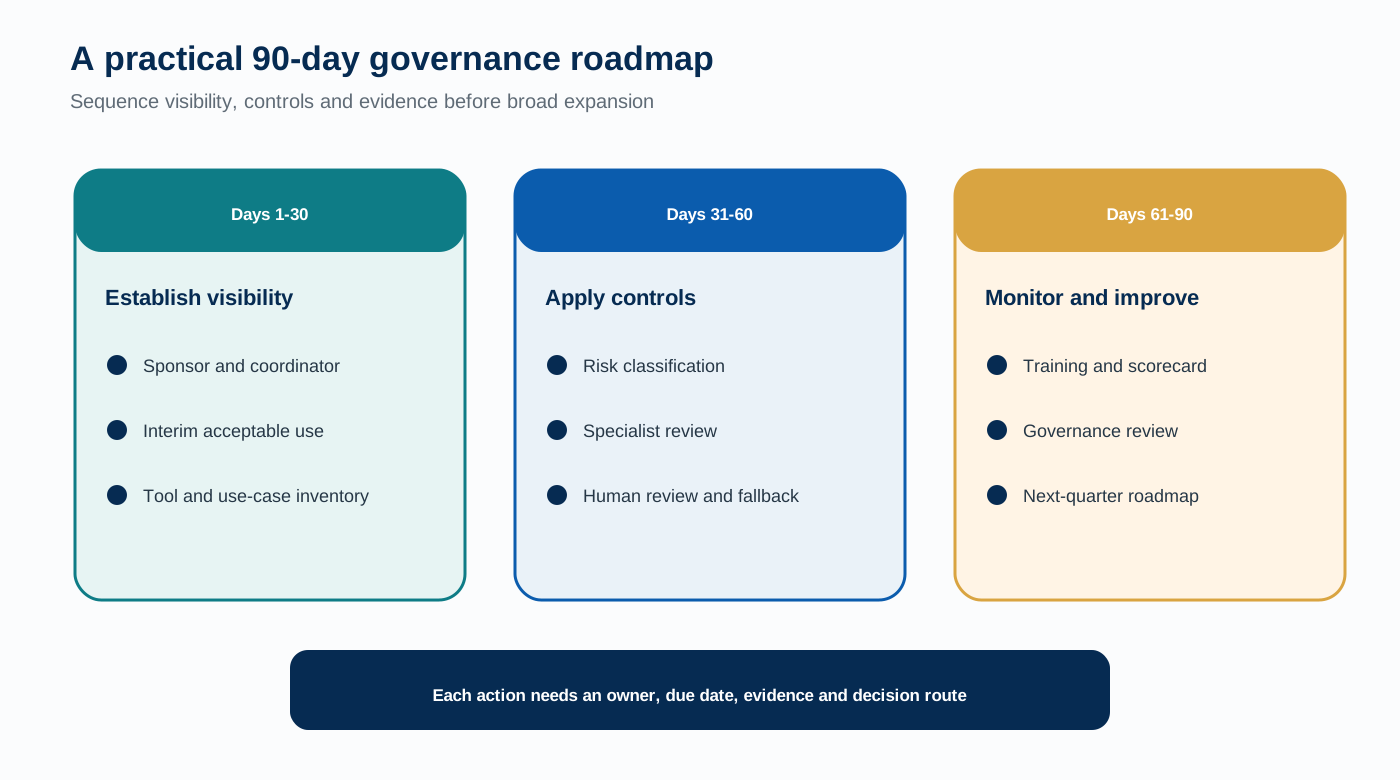
Establish a practical first layer of AI governance with clear ownership, visible use cases, proportionate risk review, human oversight, and a 90-day implementation plan.
Start with the business use case and a defined operating outcome.
Increase review depth as impact, data, autonomy and uncertainty increase.
Use approved tools, sources and explicit information boundaries.
Keep qualified, authorized people in control of material decisions.
Record versions, evidence, decisions, exceptions and conditions.
Monitor benefits and risks, respond to incidents and reassess material change.
This jurisdiction-neutral operational framework is not legal, regulatory, privacy, cybersecurity, employment, procurement or compliance advice. Organizations remain responsible for obtaining appropriate professional review and accountable approval.
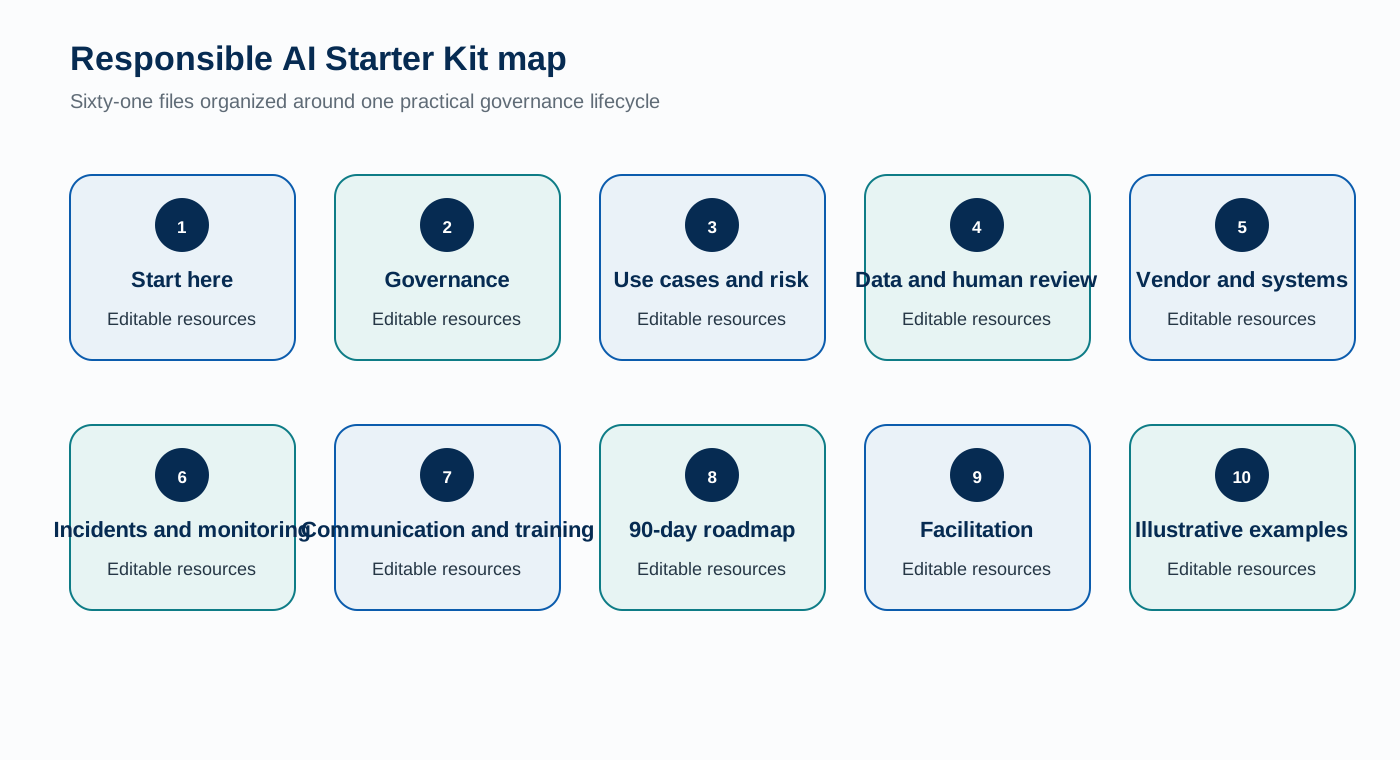
The protected package contains 61 versioned files with instructions, editable sections and synthetic illustrative examples.
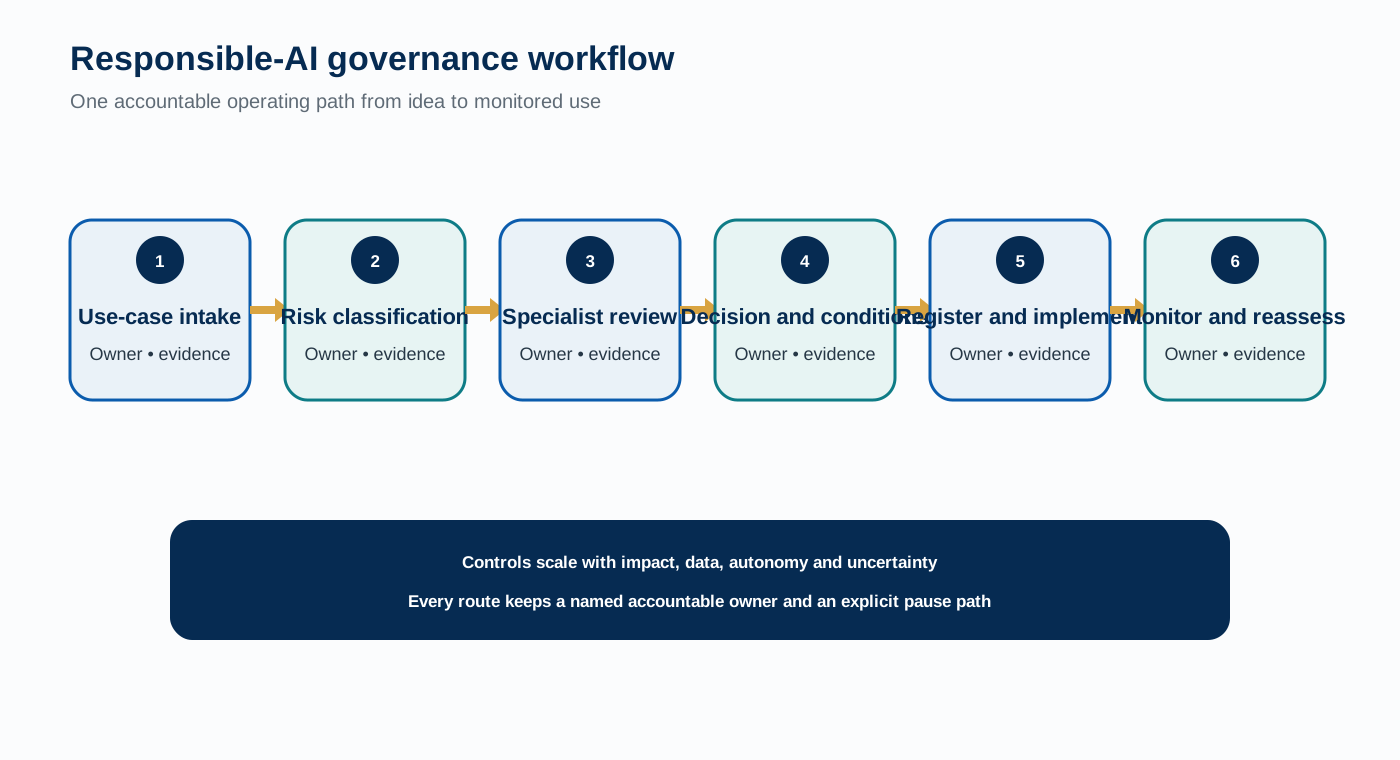
Illustrative operating workflow from intake through classification, review, approval, implementation, monitoring and reassessment.
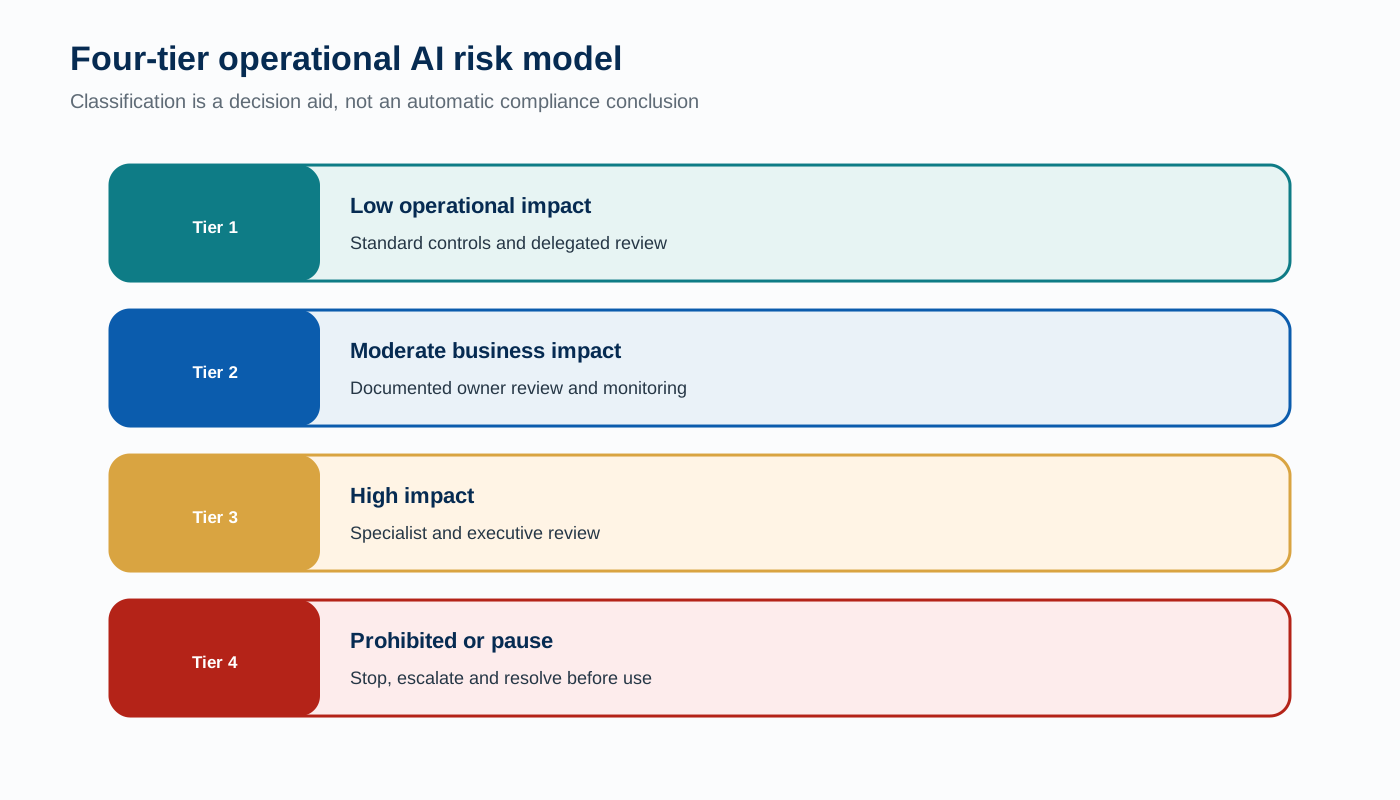
Tier 1 covers low-impact productivity with standard controls. Tier 2 adds documented owner review and monitoring. Tier 3 requires specialist and executive review. Tier 4 means prohibited or paused use until the organization can resolve the risk.
Risk classification supports structured judgment. It does not certify legal or regulatory compliance.
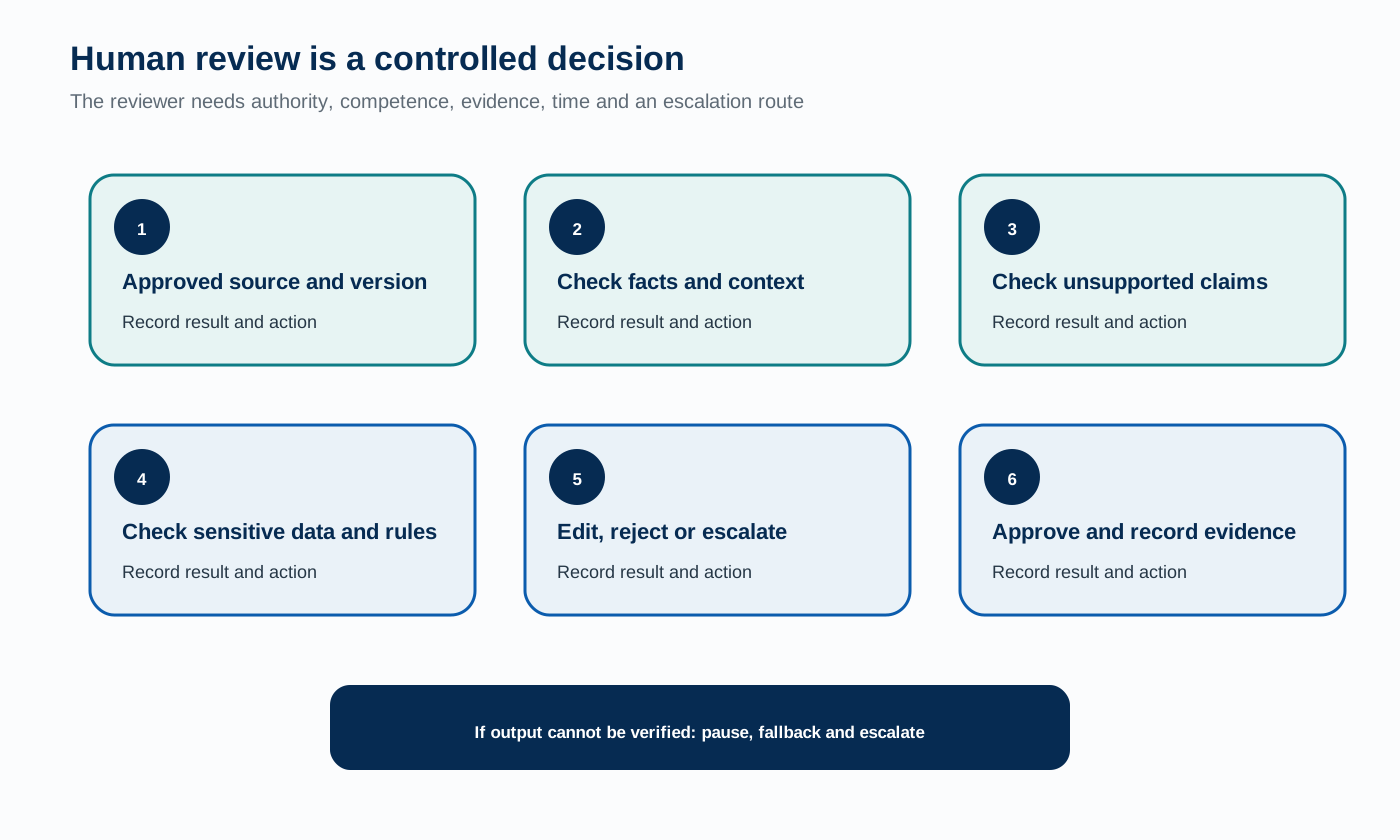
A meaningful reviewer needs relevant knowledge, decision authority, approved source access, clear acceptance criteria, time to challenge the output, authority to edit or reject, recorded evidence, fallback and escalation.
Preview use-case intake, the risk matrix, system register, human-review checklist, RACI, incident log, 90-day roadmap and training approach using fictional Northstar Services Group content.
Illustrative preview—full editable files are included in the paid toolkit after activation.
View the Sample Toolkit Preview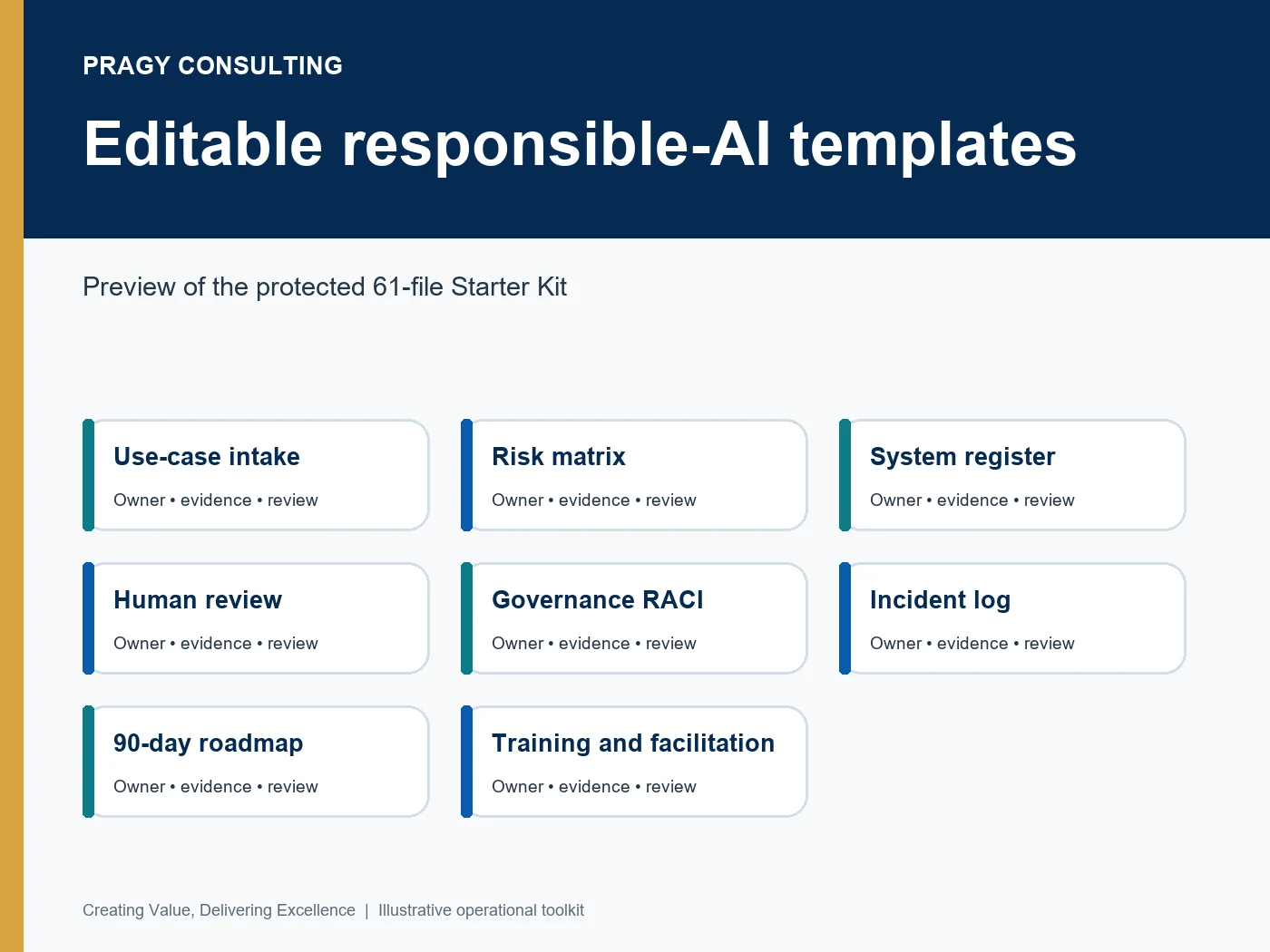
The Starter Kit is available as a CAD $149 protected digital product. Guided review, working session, enterprise, regulated, and specialist support remain inquiry-first and scope-confirmed.
CAD $149
For organizations ready to adapt a practical baseline internally.
Includes WooCommerce-controlled protected ZIP delivery after successful checkout under the approved organization-use terms. Specialist review is still required for regulated, high-impact, safety-critical, employment, privacy, cybersecurity, legal, or compliance-sensitive use.
Buy the Starter KitCAD $649
For leaders who want a focused review of their first governance artifacts and use cases.
Excludes legal redlining, policy approval, regulatory interpretation and technical implementation.
Request the Guided ReviewCAD $2,500
For up to 12 participants who need shared decisions, ownership and a 90-day roadmap.
Excludes professional assessments, technical build, on-site delivery, more than 12 participants or more than five use cases.
Discuss a Working SessionCustom scope
For multi-country, multi-unit, regulated, safety-critical, quality-critical, sensitive-data or other high-impact governance needs.
Scope, reviewers, dependencies, price, timeline and acceptance criteria require separate confirmation.
Discuss Enterprise GovernanceHigh-impact, regulated, sensitive-data, employment, safety, quality-critical, financial, eligibility, surveillance and customer-rights use requires specialist review and custom scope.
This list is illustrative and not exhaustive.
Pragy AI Fluency for Operations Leaders can prepare sponsors and managers to recognize use-case boundaries, human-review needs, risk triggers, pilot measures and when not to use AI before formal governance work begins.
Prioritize AI, analytics and automation opportunities and readiness gaps.
Explore the Opportunity MapDesign and pilot one bounded operating workflow with controls and sustainment.
Explore the Workflow SprintConnect trusted measures, review decisions, actions and optional controlled AI assistance.
Explore the Review SystemPragy Consulting combines operational excellence, Lean Six Sigma, process automation, business intelligence, change management, and practical AI-in-operations implementation.
Developed by the Pragy Consulting Founding Team
When an approved quality use case is ready for implementation, the Quality & CAPA Intelligence Accelerator connects controlled sources, data definitions, human quality review, traceable signals, actions, testing and sustainment without transferring final quality decisions to AI.
Use the AI Agent Readiness & Governance Accelerator when a use case may involve tool use, retrieval, workflow actions, autonomy, escalation or monitoring that requires clear purpose, data boundaries, human review, fallback and stop conditions.
No. The toolkit is a jurisdiction-neutral operational starter resource and does not provide legal, regulatory, privacy, security, employment, procurement or compliance advice.
No. It does not certify or guarantee compliance, security, safety, fairness, accuracy, fitness for purpose or performance.
No. The templates are jurisdiction-neutral and must be adapted with appropriate local and sector-specific professional review.
The protected package contains editable DOCX, XLSX and PPTX files plus PDF guidance, Markdown notes and a future ZIP package.
Yes. The Office files are designed to be adapted, approved, versioned and controlled by the organization.
Not under this release. The draft organization-use license is still awaiting owner and legal approval, and no redistribution right is granted.
Yes. An editable acceptable-use policy template is included, but it requires organization-specific and professional review.
Yes. The toolkit includes a four-tier operational risk-classification matrix and decision records. It is not a legal classification.
It may support early operational work, but regulated, validated, safety-critical, quality-critical or other high-impact use requires specialist review and custom scope.
No. It includes vendor and system due-diligence questions without vendor endorsement.
No. The governance process may conclude that a use case should pause, stop, seek specialist review or not use AI.
The toolkit, pre-session questionnaire, review of up to three governance artifacts and two use cases, one 90-minute virtual session, a prioritized gap summary, 30-day action plan and one follow-up email clarification within seven calendar days.
A three-hour virtual session for up to 12 participants, the toolkit, current-state review, up to five use cases, risk-tier exercise, RACI, boundaries, human-review and escalation design, a 90-day roadmap, summary and one 45-minute follow-up within 30 days.
Yes, for the Responsible AI Starter Kit only. Guided Review, Working Session, Enterprise Governance Setup, regulated, and specialist-review support remain inquiry-first and scope-confirmed.
No lifetime-update promise is made. Any future updates, support or replacement files will depend on the approved license and commercial terms.
info@pragyconsulting.com · +1 (514) 404-5435
Tell us which pathway you are considering and the governance outcome your organization needs. Do not submit passwords, credentials, personal data, patient information, regulated records, or confidential production data through this form.
A fit call can help confirm whether the Starter Kit, Guided Review, Working Session or custom scope is appropriate. Book a Responsible AI Fit Call.
No files or credentials are accepted. Information is used only to review and respond to this request.