Fragmented quality information
Quality events, CAPAs, complaints, audit findings and actions live across systems, extracts and spreadsheets.
The Pragy Quality & CAPA Intelligence Accelerator helps quality-focused organizations improve how deviations, CAPAs, complaints, audit findings, recurrence signals, actions, and management-review information are structured, reviewed, and sustained.
Use process improvement, governed analytics, practical automation, and controlled AI assistance while keeping final quality decisions with authorized people.
Start with the Quality Intelligence Blueprint
Discuss a Regulated or Validated Scope

The accelerator connects controlled definitions, reliable data, review signals, quality decisions and accountable action around one defined quality outcome.
Quality events, CAPAs, complaints, audit findings and actions live across systems, extracts and spreadsheets.
Categories and definitions vary, making trend and recurrence review difficult to trust.
Due dates are visible but ownership, thresholds and required responses are not consistently defined.
Similar records are difficult to compare and candidate signals do not reach accountable reviewers early enough.
Teams repeatedly reconcile data, rebuild slides and chase actions before each review.
Technology is proposed before taxonomy, evidence, approvals, exception handling and fallback are clear.
A signal supports review. It does not prove root cause, CAPA effectiveness, compliance, or product suitability.
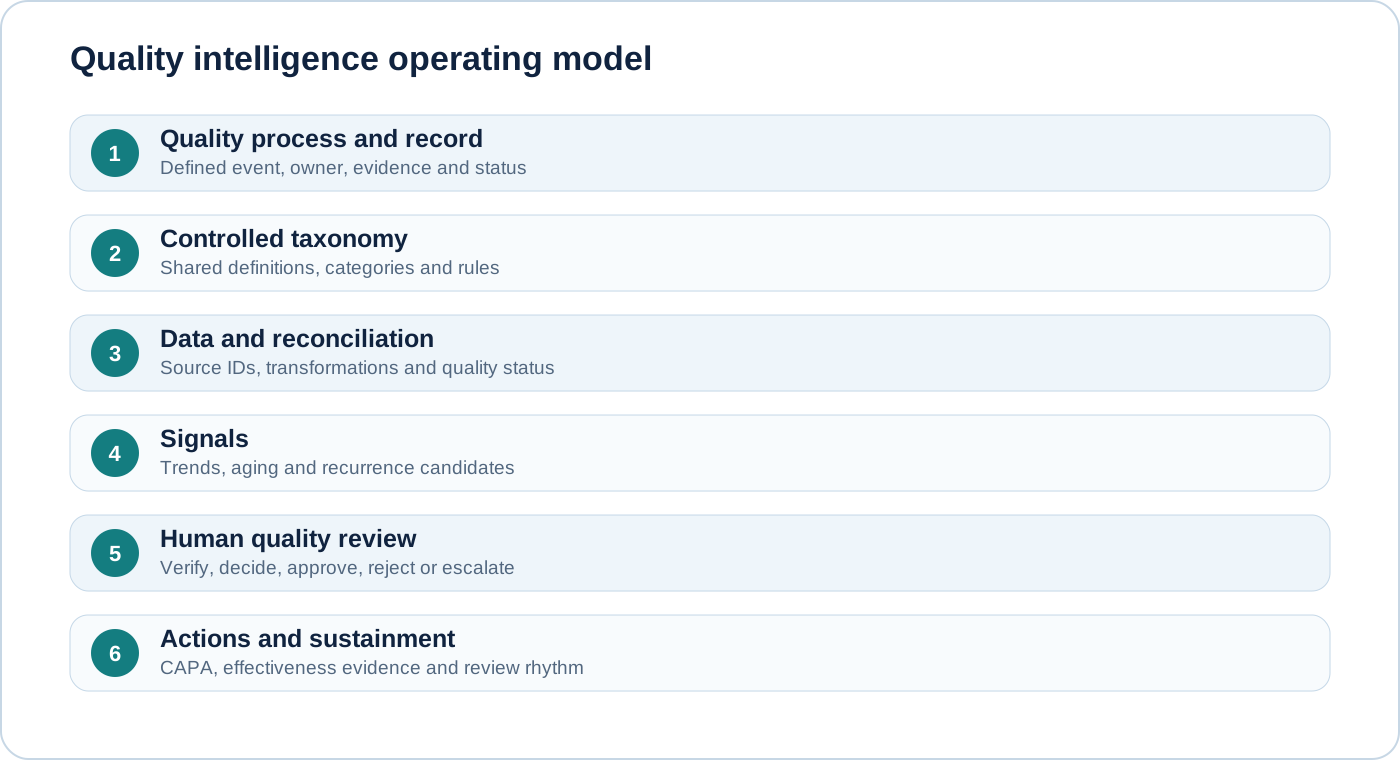
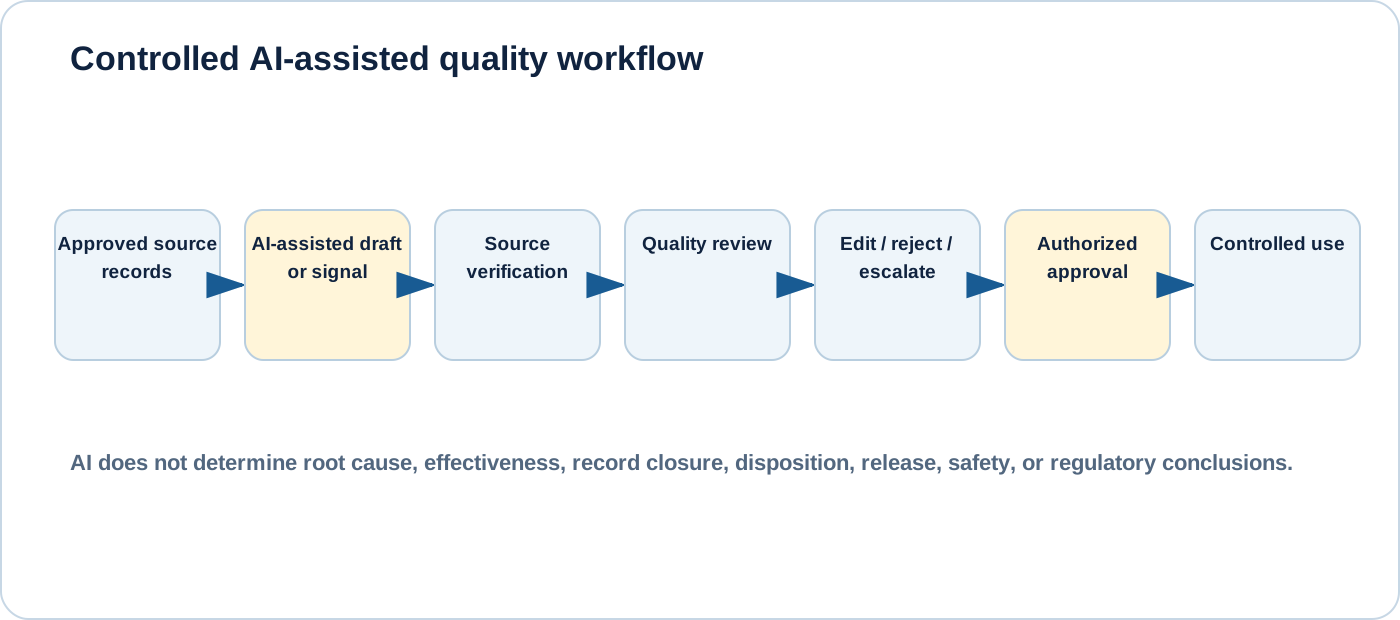
Classification may be assisted but requires review. Root cause requires evidence. Effectiveness requires evidence and authorized assessment. Closure remains a client decision.
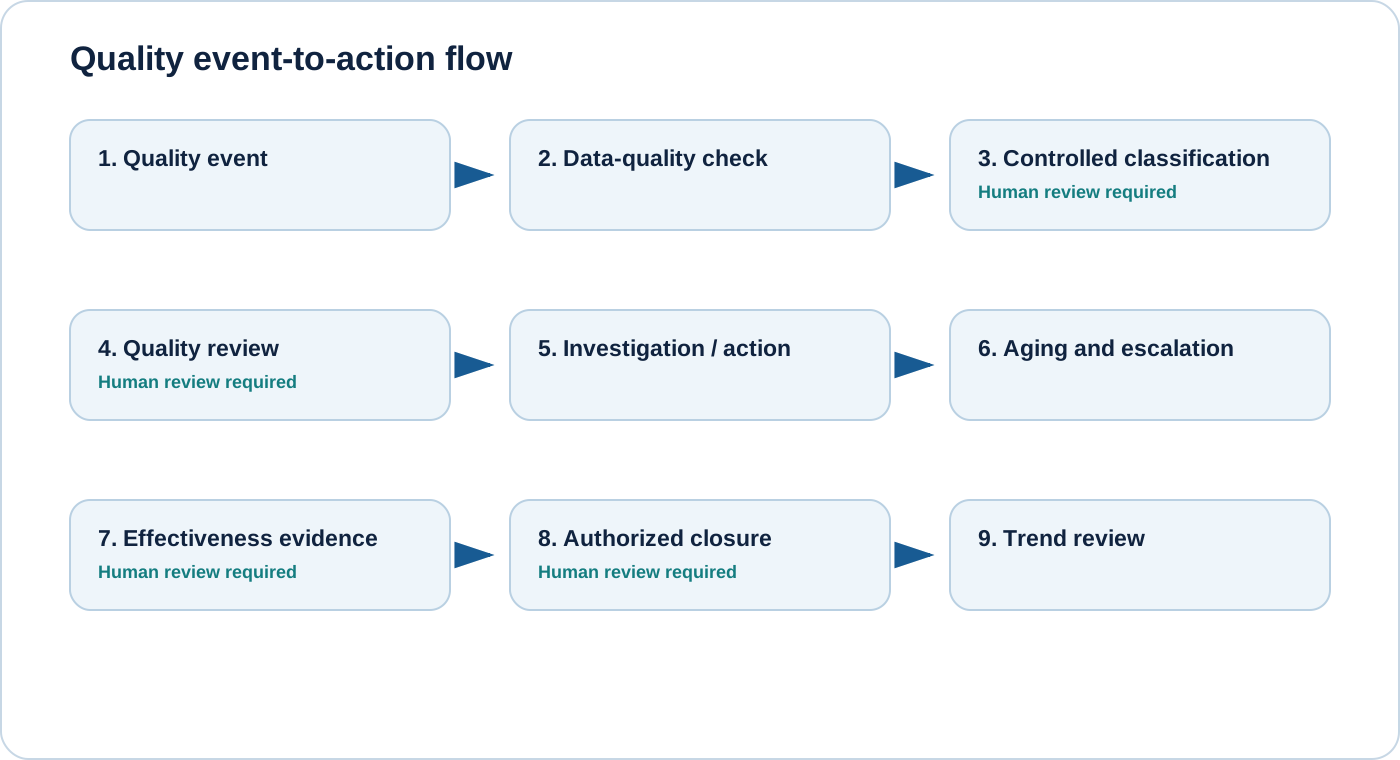
These examples illustrate possible engagement shapes. They are not named client results, regulatory conclusions, or guaranteed outcomes.
A sophisticated dashboard cannot repair missing ownership, inconsistent definitions, or unreliable source data by itself.
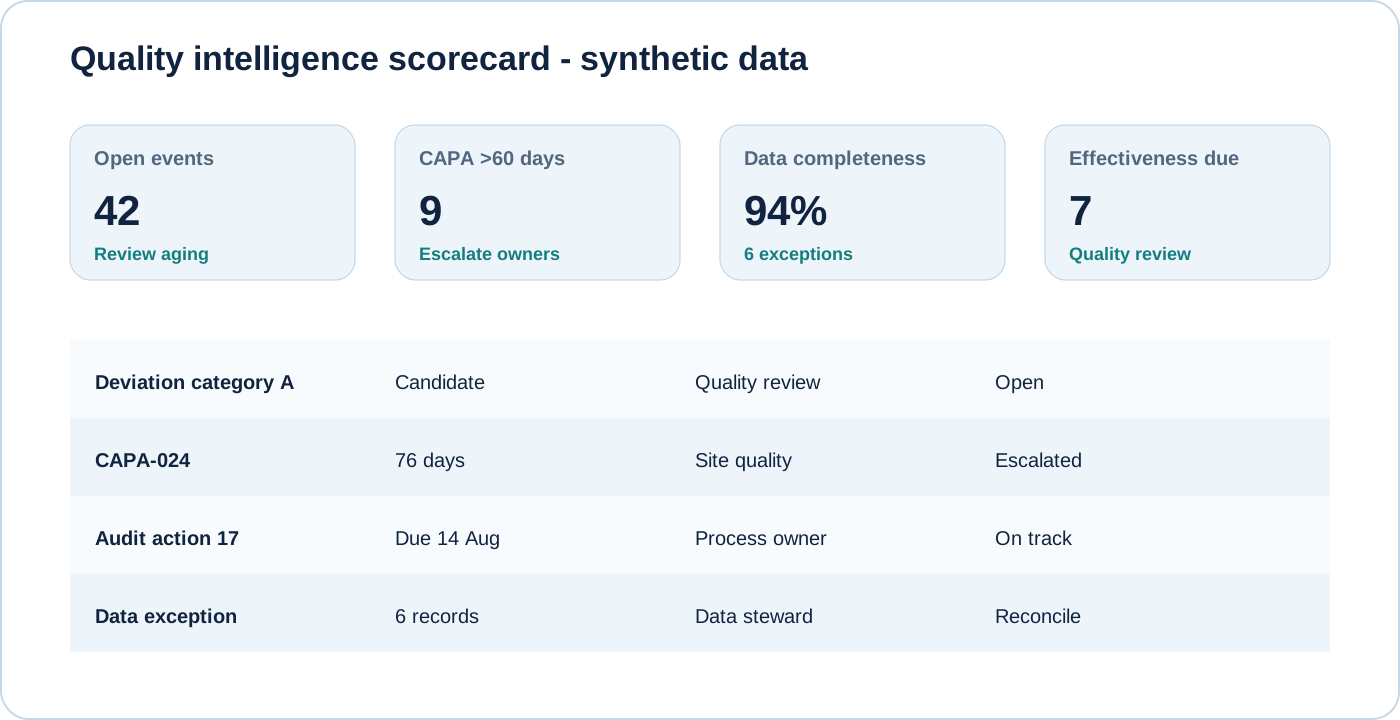
For each measure, define purpose, formula, owner, source, frequency, threshold, required response, data-quality status, and limitations. Metrics and thresholds are organization-specific.
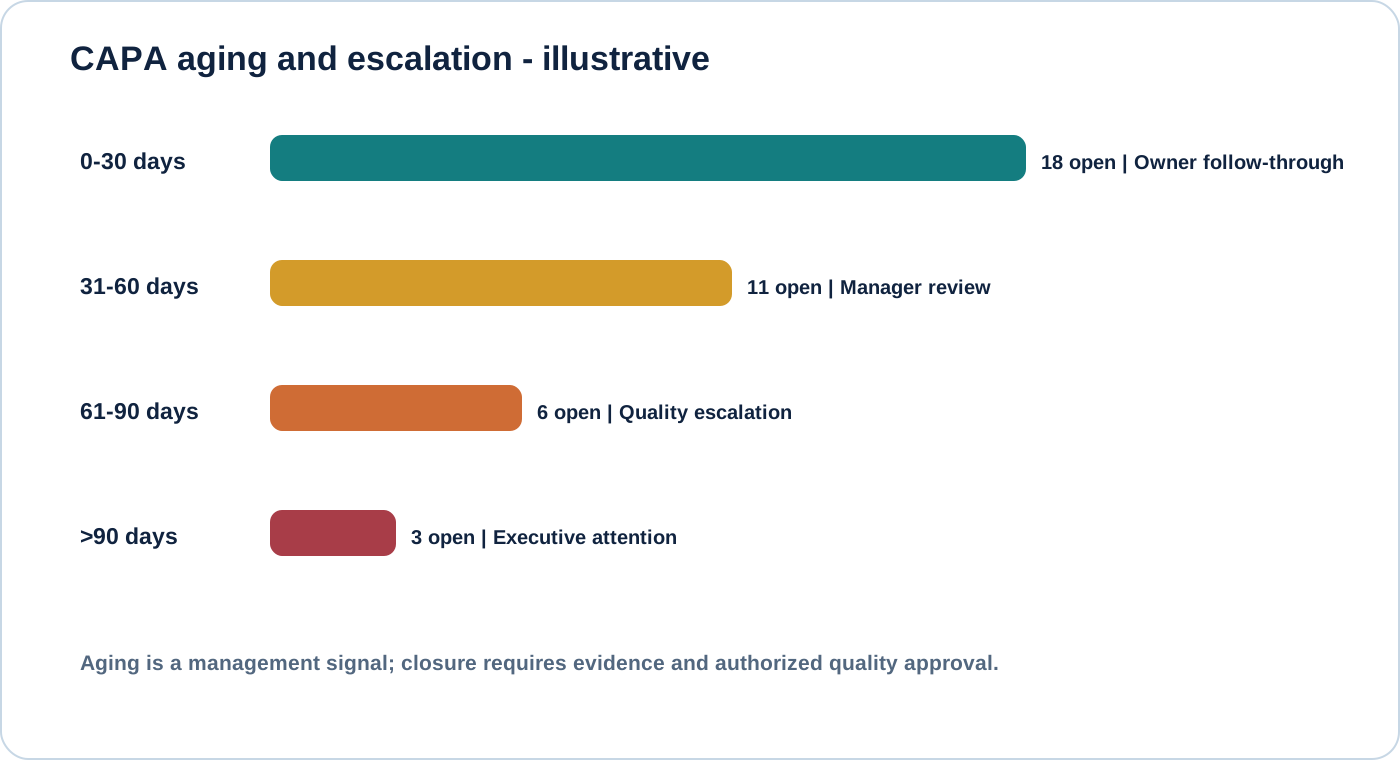
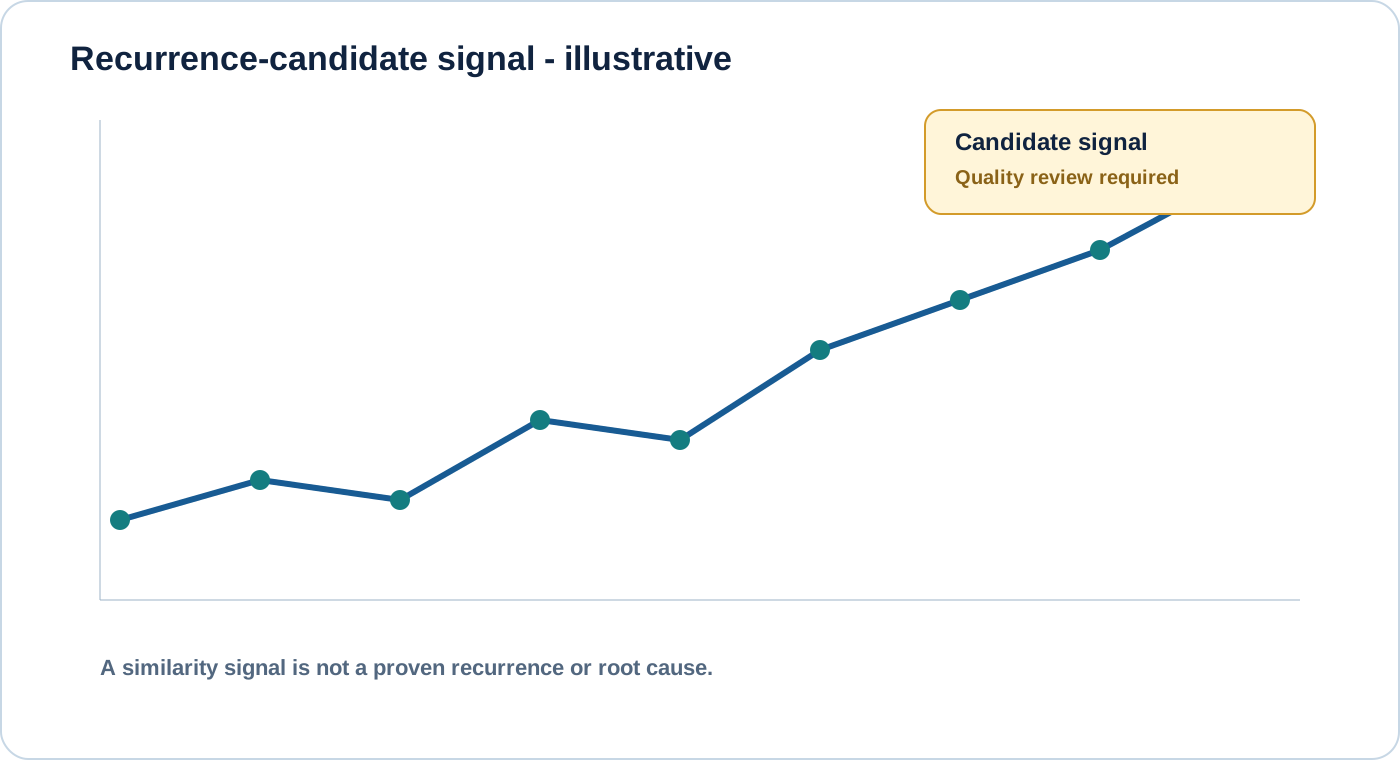
Production use depends on approved access, security, quality oversight, validation decisions, user acceptance, and the client’s change-control process.
Every pathway is inquiry-first and scope-confirmed. No checkout, payment link, record upload, regulated deployment, or formal validation is active.
CAD $4,500
Approximately 2–3 weeks
For a quality leader who needs a controlled scope, taxonomy, metric dictionary, recurrence approach, workflow requirements, wireframe and 90-day roadmap.
Excludes production dashboard, automation, AI, integration, migration, eQMS modification, formal validation, regulatory interpretation, approval, travel and licenses.
Request the BlueprintStarting at CAD $12,500
Approximately 6–8 weeks
Redesign, configure, test and transfer one bounded quality workflow or decision-support pilot with taxonomy, rules, human approvals, reconciliation, UAT, SOP, training and a 45-day sustainment review.
Production deployment is included only when explicitly approved. Regulated or validated use, custom integration and migration require custom scope.
Request the Workflow AcceleratorStarting at CAD $18,500
Approximately 8–12 weeks
Connect up to 15 measures, approved sources, trend and recurrence views, CAPA aging, action tracking, management-review preparation, human-approved narrative, training and a 45-day stabilization review.
Excludes enterprise warehouse, eQMS replacement, formal validation, release decisions, regulatory submission, unlimited sources, multiple sites and custom AI models.
Request the Operating SystemCustom scope
Required for GxP or validated deployment, multiple sites or domains, eQMS/ERP/MES/API work, large migration, sensitive data, release or safety-critical decisions, regulatory submissions, enterprise platforms or specialist review.
Scope, client quality owner, data handling, security, validation, licensing, production access, specialist review, acceptance criteria, price and timeline require separate approval.
Discuss a Regulated or Enterprise Quality ScopeA standard bounded workflow generally includes one trigger, one accountable process owner, one quality domain, one site or unit, limited roles, defined rules and approvals, defined exceptions, a measurable outcome, and a small number of approved tools or sources.
The 14-page NovaCura Manufacturing sample uses synthetic data to show scope, taxonomy, data readiness, measures, recurrence candidates, CAPA aging, controlled AI assistance, testing, management review and a 90-day roadmap.
View the Sample Quality Intelligence Pack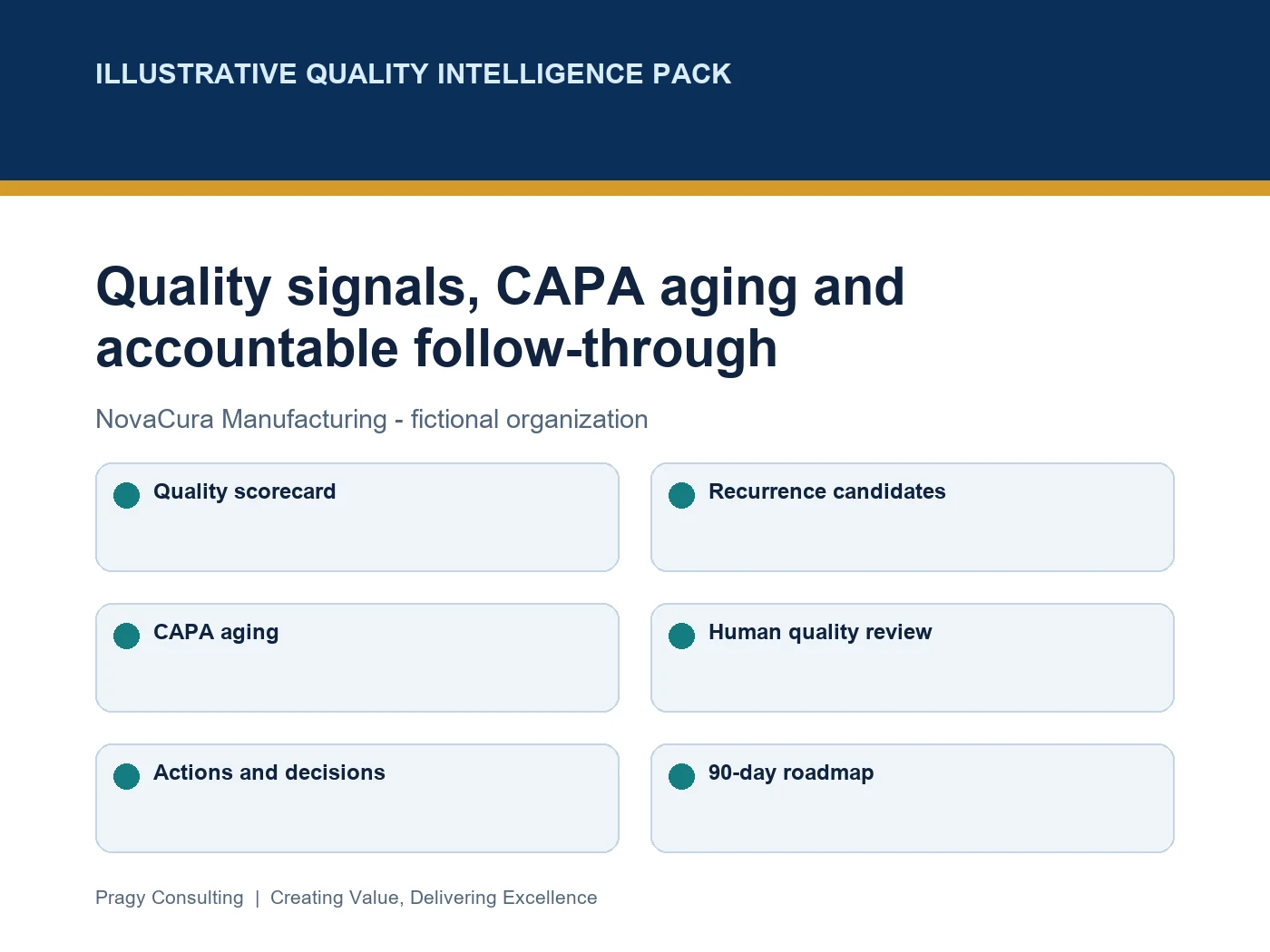
Pragy AI Fluency for Operations Leaders can prepare quality and operations sponsors to distinguish AI assistance from accountable quality decisions, identify specialist-review triggers, and understand why human review, evidence and manual fallback matter.
Use the AI Agent Readiness & Governance Accelerator to identify data boundaries, source evidence, tool permissions, human quality review, fallback, stop conditions and custom regulated or validated scope triggers before agentic quality work proceeds.
Pragy Consulting combines Lean Six Sigma, operational excellence, Power BI, process automation, change management, project governance, and practical AI-in-operations thinking.
Delivered by the Pragy Consulting Founding Team
No. The accelerator improves one bounded quality workflow or performance system. It does not replace an eQMS, QMS, ERP, MES, enterprise data platform, or the client quality unit.
No. Standard packages include ordinary implementation testing and reconciliation, not formal computer-system validation. The client determines validation applicability; validated deployment is custom scope under the client's approved system.
No. AI may help prepare classifications, summaries, retrieval results or recurrence candidates, but final root cause requires evidence and an authorized client investigation and approval process.
No. AI must not independently approve or close a deviation, CAPA, complaint, audit finding, investigation, effectiveness check, product disposition or release decision.
Potentially, but regulated, validated, safety-critical, quality-critical or sensitive-data use requires custom scoping, client quality oversight, a validation decision, security review and appropriate specialist approval.
A standard scope may focus on a deviation or nonconformance, CAPA, complaint, audit finding, effectiveness-check, quality-management-review, or quality-metrics workflow.
One bounded workflow has a defined trigger, accountable process owner, quality domain, site or unit, limited roles, rules, approvals, exceptions, measurable outcome and a small number of approved tools or sources.
The tools depend on the approved environment and operating need. A scope may use existing quality systems, Power BI, Power Platform, SharePoint, approved forms, standard connectors, conventional automation or approved AI services. No tool is mandatory.
No. Power BI may be suitable for a governed quality-performance view, but the reporting layer depends on the client environment, data and approved scope.
The work normally needs high-level process context, controlled definitions, representative non-sensitive structures, source identifiers, dates, status history, owners, due dates, approvals, action links, data-quality status and approved access arrangements.
No. Do not submit passwords, credentials, patient information, personal data, batch records, investigation records, complaint records, regulated records, confidential production data or sensitive quality information through the public form.
No. Platform, connector, hosting, AI-service, eQMS or other third-party license fees are excluded unless explicitly included in an approved scope.
No. The accelerator does not certify compliance, inspection readiness, validation, regulatory approval, CAPA effectiveness, product quality, root cause, or any guaranteed operating result.
The client may sustain the workflow internally, complete additional validation, stabilize or scale the system, expand to a separately scoped workflow, or connect it to a broader operations-review pathway.
No. Outcomes depend on process conditions, definitions, data, participation, systems, security, validation, adoption, controls and client decisions. No financial, compliance or operating improvement is guaranteed.
info@pragyconsulting.com · +1 (514) 404-5435
Tell us about one quality process, the operating problem, and the support pathway you are considering. Do not submit passwords, credentials, personal data, patient information, batch records, investigation records, complaint records, regulated records, confidential production data, or sensitive quality information through this form.
Use a fit call to clarify the quality domain, accountable owners, data conditions, systems, validation needs, and appropriate pathway. Book a Quality Accelerator Fit Call.
No files, records, credentials, or confidential production information are accepted. Inquiry content is not processed by AI.