
Too many metrics
Teams spend time maintaining measures that do not support a clear priority or decision.
The Pragy AI-Enabled Operations Review System connects trusted KPIs, decision-ready dashboards, exception thresholds, management-review routines, action tracking, and optional human-reviewed AI summaries into one practical operating system.
Designed for leaders who need more than another dashboard.
Discuss Managed Review Support
Need workflow implementation first? Explore the Workflow Intelligence Sprint

The Responsible AI Starter Kit provides practical governance templates for approved use, risk classification, human review, incidents, monitoring, and accountable decisions alongside an operations review system.
Organizations often invest significant effort preparing reports, but the review still depends on inconsistent definitions, manual explanations, unclear thresholds, repeated status updates, and actions that are difficult to track.
The Operations Review System turns reporting into an operating routine by connecting the data to decisions, owners, escalations, and follow-through.
Teams spend time maintaining measures that do not support a clear priority or decision.
The same KPI can use different formulas, scopes, sources, owners, or refresh dates.
Performance is visible, but thresholds, decisions, actions, and escalation are not connected.
Leaders and analysts repeatedly consolidate context and write the same review commentary.
Review time is spent presenting information instead of resolving exceptions and making decisions.
Actions lack clear owners, due dates, closure evidence, or a reliable escalation route.
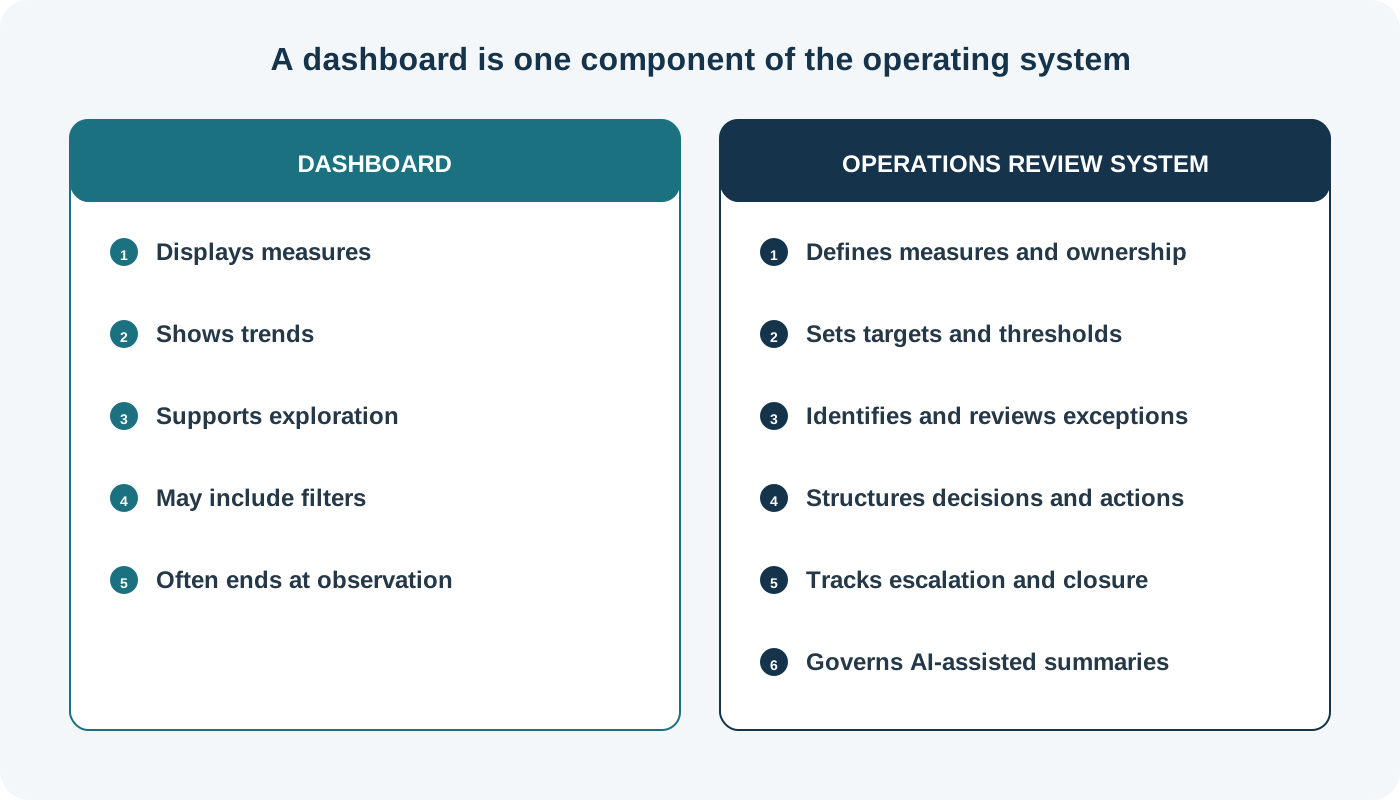
A dashboard shows information. An operations review system defines what the information means, who reviews it, what requires action, who owns the response, and how follow-through is sustained.
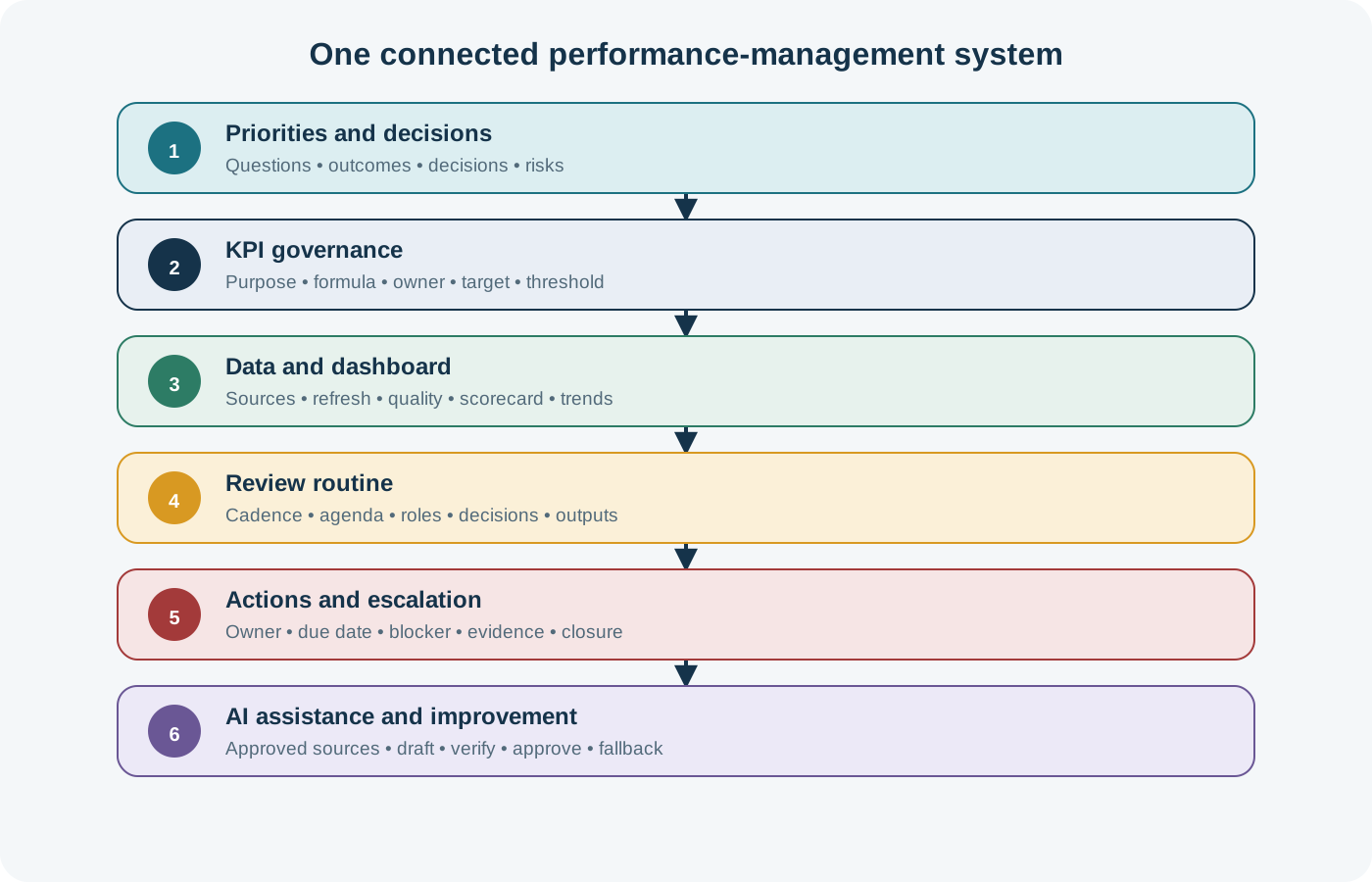
Business questions, outcomes, decisions, and escalation risks.
Metric purpose, formula, owner, source, refresh, target, threshold, and limitation.
Approved sources, transformations, quality controls, scorecard, trends, and exception views.
Cadence, agenda, roles, preparation, decision rights, time-boxing, and outputs.
Owner, due date, priority, blocker, status, evidence, closure, and decision log.
Approved sources, controlled logic, draft label, verification, human approval, version, fallback, and backlog.
AI is optional. The system must remain usable, auditable, and accountable without AI.
The engagement gives accountable leaders a clearer operating rhythm. It does not take ownership of client decisions, certify data, or replace investigation and judgment.
The business questions, operating priorities, decisions, risks, and escalation needs the review must support.
Clear purpose, formula, scope, owner, source, refresh, target, thresholds, response, limitations, and approval for each metric.
Source, transformation, reconciliation, refresh timing, data-quality checks, access, and ownership requirements.
A decision-ready operating view showing status, trends, exceptions, owners, actions, and required decisions.
Defined red, amber, and green logic with data-quality checks, review expectations, and escalation paths.
Purpose, cadence, agenda, roles, preparation, decision rights, meeting outputs, and time-boxing.
Action register, decision log, priorities, owners, due dates, blockers, evidence, closure, and escalation.
A draft-only narrative workflow using approved sources, traceability, reconciliation, verification, human approval, and manual fallback.
Role-based guidance for leaders, metric owners, data stewards, users, and system administrators.
A 45-day review of adoption, data health, control effectiveness, review behavior, actions, and improvement needs.
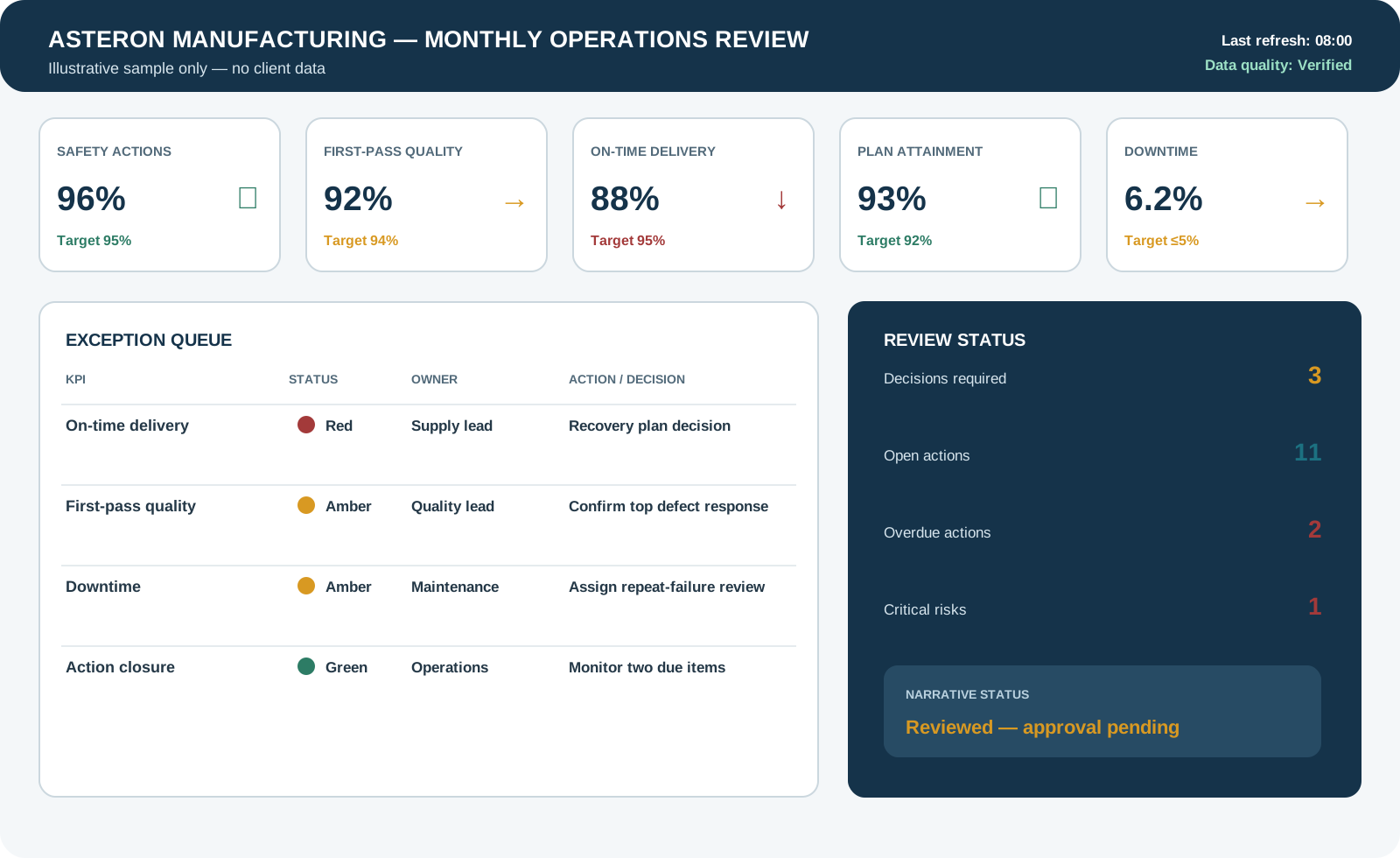
Every KPI should support a business question, decision, accountable result owner, data steward, approved calculation, useful refresh, target, exception rule, expected response, and known limitation.
Not every variation requires escalation. AI may organize approved context, but the accountable owner decides what the signal means. Closure requires evidence and learning returns to the next review.
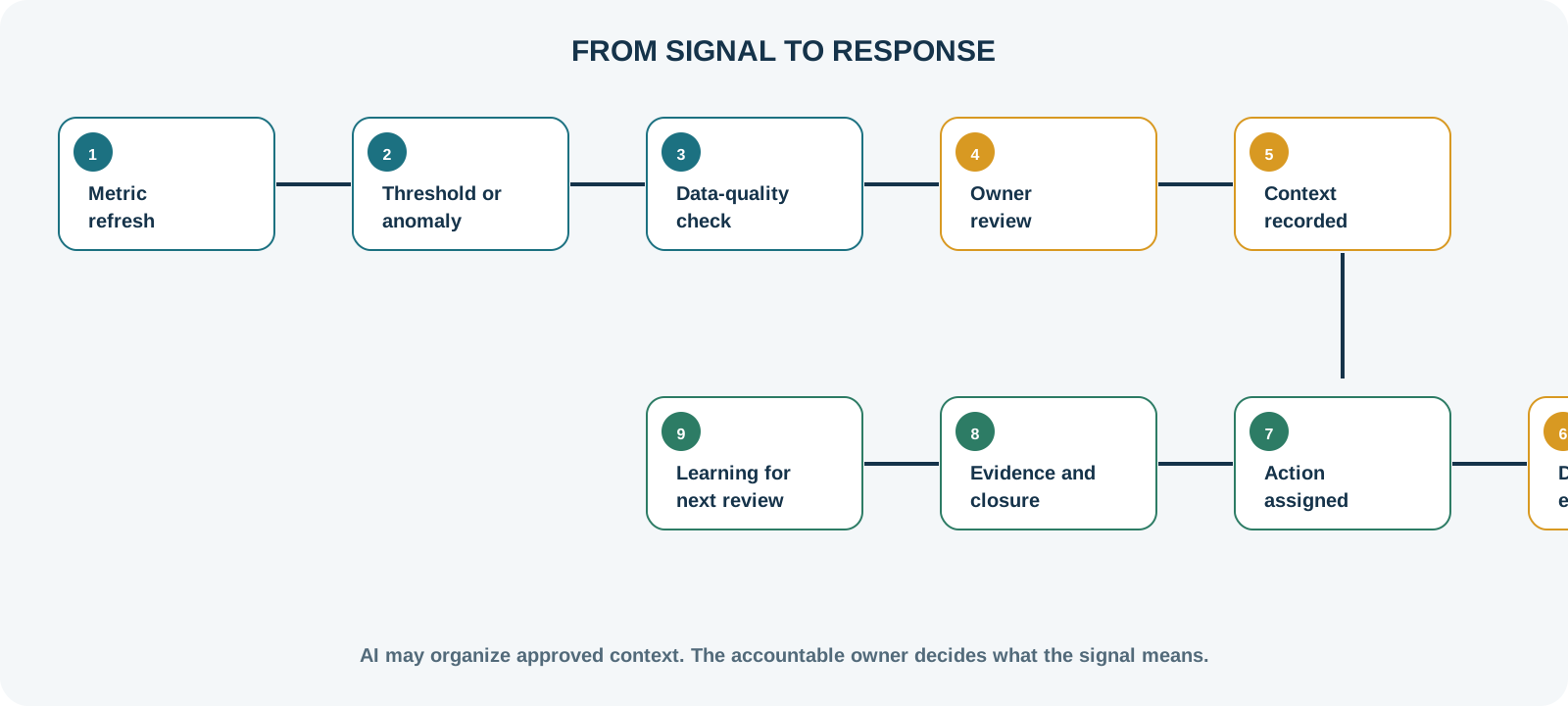
Where the client environment and governance allow, AI may prepare a first draft of the review narrative from approved metrics, exception notes, and action information. The draft remains clearly labelled and must be verified and approved by an accountable person before distribution.
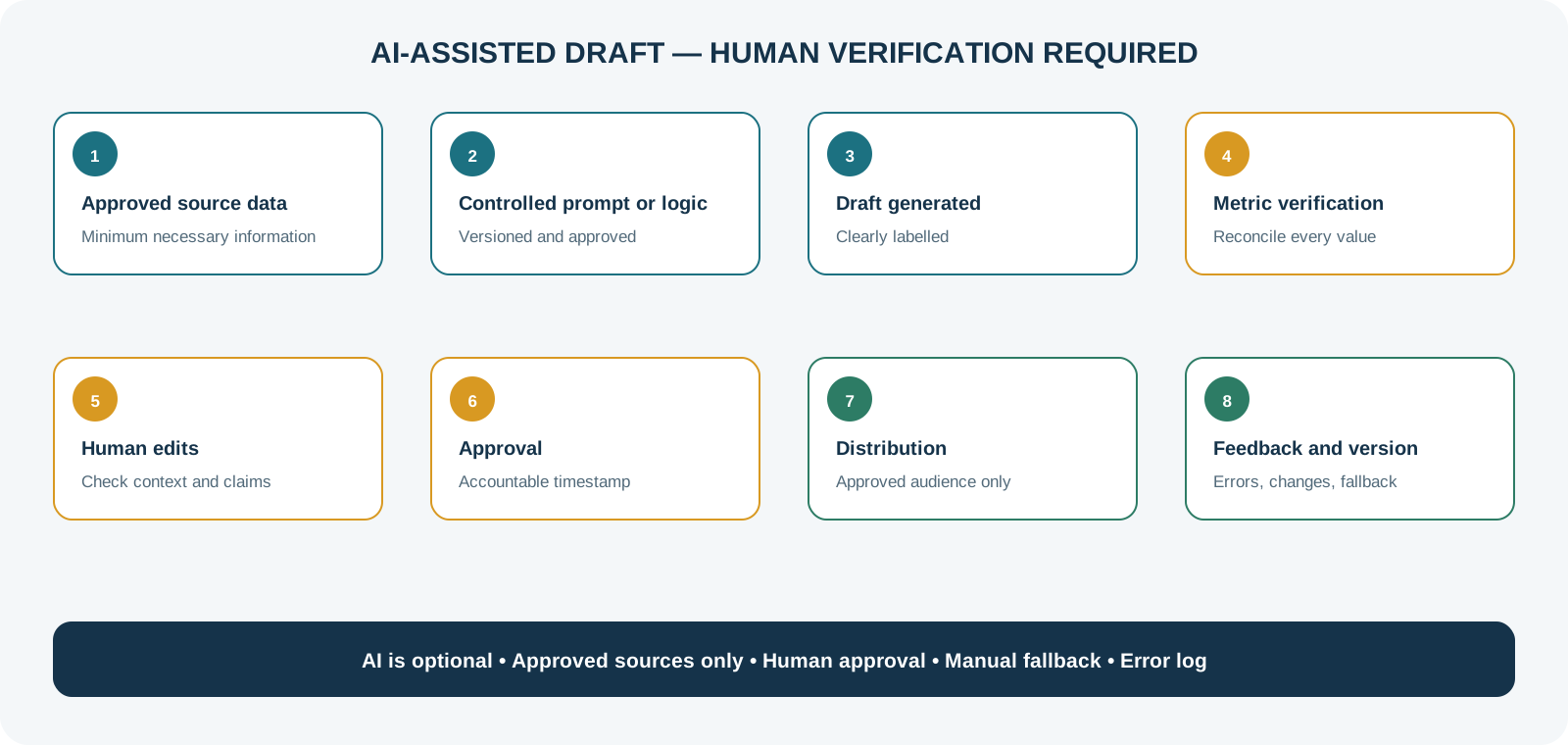
AI assistance is optional and is excluded when it does not meet the client’s security, privacy, validation, or operating requirements.
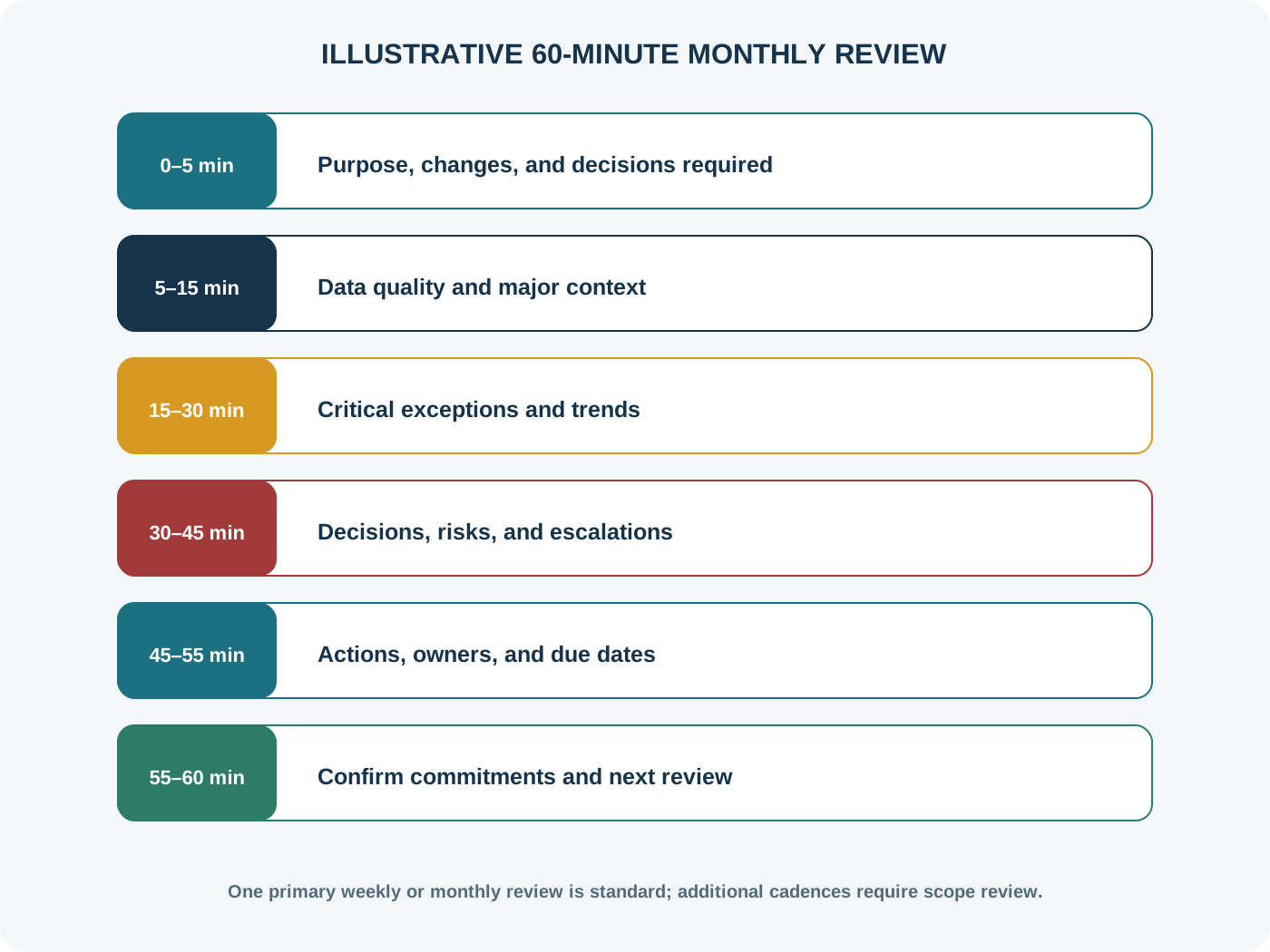
The standard public package covers one primary weekly or monthly review routine. Daily systems, multiple cadences, and enterprise operating reviews require custom scope.
Connect safety, quality, delivery, productivity, capacity, downtime, exceptions, and accountable action.
Review quality signals, aging, risks, ownership, escalation, decisions, and action closure without automating accountable approval.
Bring delivery, backlog, inventory, supplier, service, exception, and follow-through information into one review rhythm.
Structure the review of service, close, working-process, exception, and action measures for accountable owners.
Connect milestones, risks, dependencies, resources, decisions, actions, owners, and due dates.
Review demand, service levels, aging, capacity, exceptions, escalations, and improvement work.
Use demand, response, quality, backlog, escalation, and closure measures to drive action.
Create a focused operating review with fewer trusted measures, visible priorities, and clear follow-through.
These examples illustrate possible engagement shapes. They are not named client results, guaranteed outcomes, or recommendations to automate accountable decisions.
Confirm the business area, review purpose, sponsor, owner, decisions, cadence, users, systems, and boundaries.
Map priorities, business questions, candidate measures, ownership, thresholds, and expected response.
Assess sources, definitions, refresh, reconciliation, quality, security, licensing, and access.
Design the scorecard, exception logic, charter, agenda, action system, AI decision, and controls.
Build the approved reporting, workflow, review, and action components within scope.
Run data, dashboard, exception, action, access, fallback, and acceptance scenarios.
Transfer role guidance, administration, review behavior, ownership, and support.
Review adoption, data health, controls, actions, and improvement needs after launch.
Production deployment depends on client access, approved data, security, licensing, testing, and release decisions.
CAD $4,500
Approximately 2-3 weeks after complete intake and stakeholder availability
For leaders who need a build-ready KPI, review, action, dashboard, and implementation design before technical work.
Main output: A build-ready performance-management system blueprint.
Excludes: Production dashboard, data model or engineering, configured automation, integration, AI deployment, licenses, migration, custom APIs, validation, travel, and ongoing support.
Request the BlueprintStarting at CAD $12,500
Approximately 6-8 weeks after scope, access, security, data, licensing, and stakeholder prerequisites are complete
For one business area ready to build and pilot a controlled scorecard, dashboard, review routine, action system, and optional human-reviewed AI draft.
Main output: A controlled performance-review system and operating routine.
Scope note: Final scope and price depend on data condition, source systems, connectors, volume, transformations, security, row-level security, licensing, refresh, KPI complexity, AI approval, validation, users, cadences, deployment, and client availability.
Request the System BuildStarting at CAD $1,500 per month
Three-month minimum after an approved implementation or readiness review
For clients strengthening one approved monthly review rhythm through KPI-health checks, pack preparation, action follow-through, facilitation support, and a controlled improvement backlog.
Boundary: Pragy Consulting does not make client decisions or certify metric accuracy. Major changes, new integrations, frequent reporting, or extensive analysis are separately scoped.
Inquiry only. No subscription checkout or recurring billing is active.
Discuss Managed Review SupportCustom scope
Timeline confirmed after qualification, data, security, and architecture review
For multiple sites, cadences, scorecards, languages, regulated needs, complex security, extensive data engineering, custom integration, or sensitive-data processing.
Main output: A separately approved architecture, scope, delivery model, controls, and acceptance plan.
Discuss Enterprise ScopeNeed to improve the underlying workflow first? Explore the Workflow Intelligence Sprint.
Organizations may enter at the stage that matches their current readiness.
Pragy Consulting combines operational excellence, Lean Six Sigma, Power BI, process automation, change management, project governance, and practical AI-in-operations thinking.
The system is designed around the decisions and operating behaviors the organization needs - not around a dashboard template or an AI feature.
Delivered by the Pragy Consulting Founding Team
Review a fictional performance pack showing KPI definitions, scorecard status, trends, exceptions, actions, decisions, risks, and a human-reviewed narrative workflow.
View the Sample Review Pack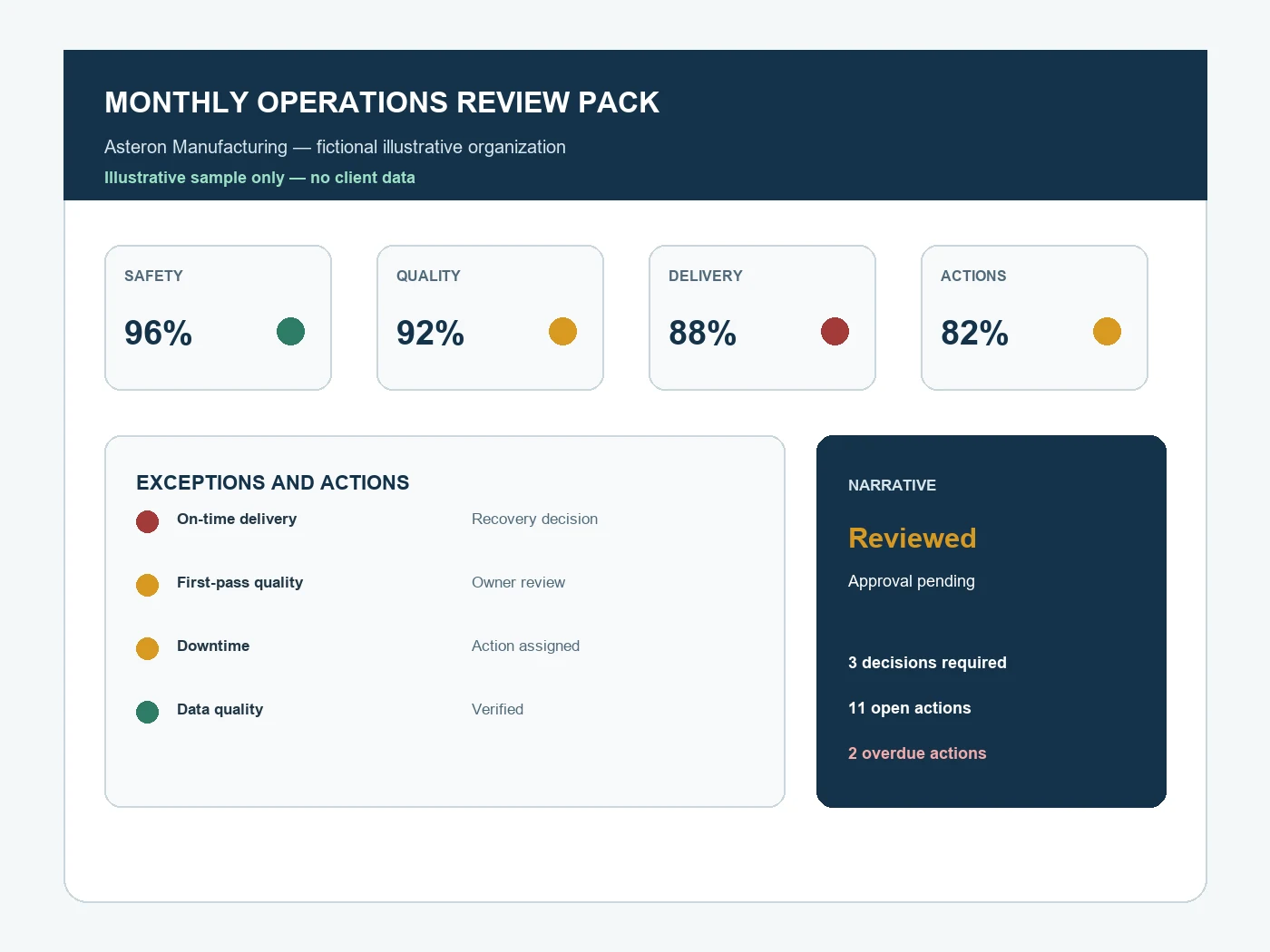
The Quality & CAPA Intelligence Accelerator connects quality metrics, CAPA aging, recurrence candidates, data quality, authorized review, actions, effectiveness evidence and management-review preparation around one bounded quality domain.
Pragy AI Fluency for Operations Leaders helps leaders understand the difference between metrics, summaries, signals, decisions, human approval, manual fallback and responsible pilot measures before AI-assisted reporting is considered.
The AI Agent Readiness & Governance Accelerator can define what an agent may retrieve, summarize, route, draft, refuse, escalate and monitor while preserving human approval and fallback in the review system.
No. A dashboard is one valuable component. The engagement also defines KPI governance, thresholds, review cadence, decision rights, actions, escalation, ownership, training, and sustainment.
No. The reporting layer depends on the approved environment and operating need. Existing tools or another suitable platform may be used. Power BI is not mandatory and no vendor endorsement is implied.
No. AI is optional. The system must remain usable, auditable, and accountable when AI is turned off. Standard process, reporting, and review controls provide the foundational value.
The starting price covers the standard bounded System Build described on this page. Final scope and price depend on data, systems, connectors, security, licensing, KPI complexity, users, validation, deployment, and client availability.
Potentially. The fit and readiness review determines whether the existing dashboard, data model, definitions, and controls can support the required review system or need scoped changes.
The engagement needs approved KPI definitions, representative data context, source and refresh information, known quality limitations, ownership, and secure access arrangements appropriate to the approved scope.
No. Do not submit passwords, credentials, personal data, patient information, regulated records, or confidential production information through the inquiry form.
Potentially, but regulated, validated, quality-critical, or sensitive-data scope requires additional review and custom scoping. Standard packages do not include legal advice, compliance certification, or computer-system validation.
An accountable person verifies the metrics and statements, makes any edits, and approves the narrative before distribution. The AI output remains a clearly labelled draft until that approval is recorded.
No. Platform, connector, hosting, AI-service, or third-party license fees are excluded unless explicitly included in an approved scope.
It is inquiry-only support for one approved review system and one primary monthly cadence, including review-pack preparation support, KPI-health checks, action follow-through, facilitation support, and a controlled improvement backlog.
No. Managed Review Support is contracted through an approved proposal or retainer agreement. No subscription checkout or recurring billing is active.
No. Outcomes depend on definitions, data, participation, technology, operating behavior, adoption, controls, and client decisions. No specific financial or performance result is guaranteed.
The client may operate the system internally, stabilize or scale it, add a separately scoped review routine, request Managed Review Support, or expand the data, workflow, or improvement roadmap.
Request the Pragy AI-Enabled Operations Review System to define trusted KPIs, make exceptions visible, structure the review, assign actions, and support accountable follow-through.
info@pragyconsulting.com · +1 (514) 404-5435
Tell us about the review, KPIs, data, reporting effort, and decisions your organization needs to improve. Do not submit passwords, credentials, personal data, patient information, regulated records, or confidential production data through this form.
Use a fit call to clarify the review purpose, KPI scope, data sources, current reporting effort, decision needs, and whether a Blueprint, System Build, Managed Support, or custom engagement is appropriate. Book an Operations Review Fit Call.
Information is used only to review and respond to this request. Do not submit credentials, confidential production information, regulated records, patient information, or personal data.